





As of February 2026, Formula 1 stands at a historic crossroads. We are currently witnessing the dawn of the most radical technical overhaul in the sport’s history, as the “2026 Era” officially begins. While the new chassis regulations—focused on “nimbler” cars and active aerodynamics—have captured public attention, a fierce technical and political war is being waged behind the scenes regarding the new Power Units (PU).
The heart of the current conflict is not just about the transition to sustainable fuels, but a specific “grey area” in engine physics that has split the paddock into two camps
The 2026 Power Unit: A 50/50 Revolution
The new regulations have moved away from the complex MGU-H (Heat) system, simplifying the engine to attract new manufacturers like Audi and Ford (partnering with Red Bull). The core architecture is a 1.6-liter V6 Turbo, but the power delivery has shifted fundamentally:
-
Electrical Output: Increased from 120 kW to 350 kW (approx. 470 hp).
-
The 50/50 Split: The Internal Combustion Engine (ICE) and the battery now contribute almost equally to the car’s total output.
-
Sustainable Fuels: 100% advanced sustainable fuels are now mandatory, removing the sport’s reliance on fossil-based energy.
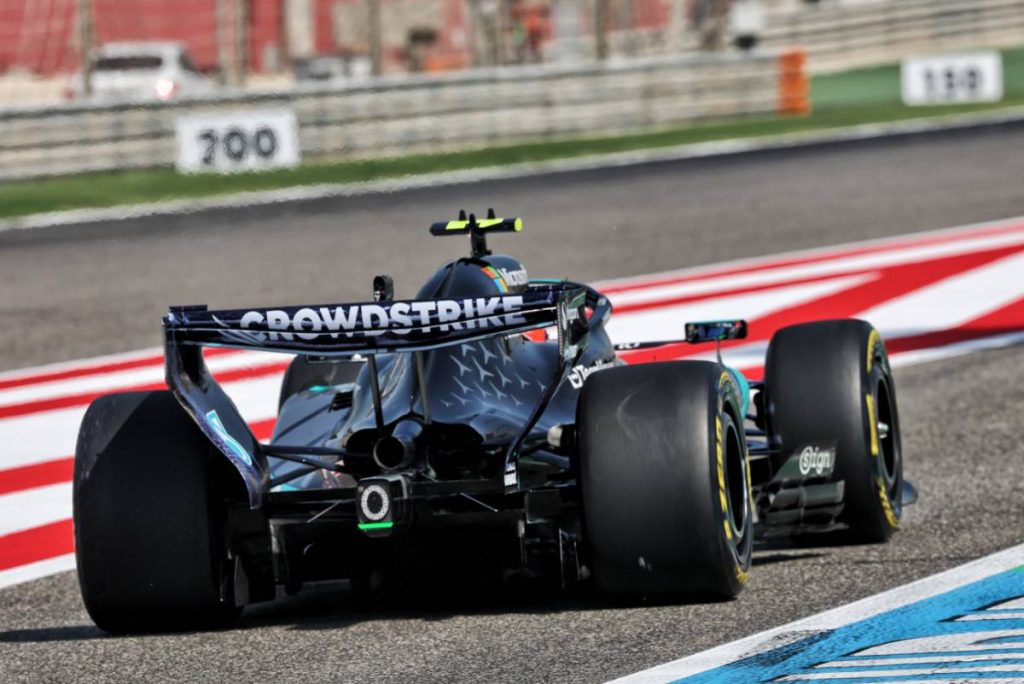
While these goals were intended to level the playing field, pre-season testing in Bahrain (February 2026) has revealed a significant technical controversy: the Compression Ratio Dispute.

The Current Debate: The “Hot vs. Cold” Loophole
The 2026 regulations mandate a maximum compression ratio of 16:1 (down from 18:1 in previous years). However, the technical wording of the FIA rules created a massive oversight. Historically, the compression ratio has been measured at ambient (cold) temperature when the car is stationary in the garage.
The Mercedes Advantage?
Rival manufacturers, reportedly led by Audi and Red Bull-Ford, have raised alarms that Mercedes High-Performance Powertrains (HPP) has engineered a “trick.” The theory is that Mercedes’ engine complies with the 16:1 limit when cold, but due to specific material expansion and thermal properties, the ratio increases significantly when the engine reaches its operating temperature of 130°C.
The Stakes: Analysts suggest this “operating temperature loophole” could provide an extra 20–30 horsepower, a massive margin in a sport where tenths of a second are won and lost in the engine’s efficiency.
Mercedes maintains their engine is “crystal clear” in its legality, arguing that they have simply out-engineered their rivals within the written letter of the law.
The Next Step: The High-Stakes Vote
To resolve this, the FIA has called for an emergency e-vote via the Power Unit Advisory Committee (PUAC). This vote, expected to conclude by late February or early March 2026, is one of the most critical political moments in recent F1 history.
What is being voted on?
The proposal introduces a mandatory “Hot Test” starting August 1, 2026. Under this new rule, engines must demonstrate compliance with the 16:1 compression ratio at both ambient temperature and a representative operating temperature of 130°C.
The Voting Dynamics
For the rule change to pass mid-season, it requires a super-majority:
-
The Players: Mercedes, Ferrari, Honda, Audi, and Red Bull Powertrains.
-
The Conflict: Ironically, some rivals who originally complained (like Audi) may now vote against the change. Why? Because they realized that if they can’t stop Mercedes for the first half of the season, they would rather leave the loophole open so they can copy the technology themselves for the second half.
-
The Outcome: Expectation is leaning toward a resolution that provides “clarity.” Williams boss James Vowles has signaled that a compromise is imminent to prevent the season from descending into a series of legal protests at the Australian Grand Prix.
Research & Technical Analysis: The “Anti-Racing” Fear
Beyond the engine legality, recent research and driver feedback from the February tests have highlighted a secondary debate: Energy Management.
Research into the new 50/50 power split shows that drivers are now “energy-starved” on long straights. Max Verstappen and other leading drivers have labeled the new regulations as “anti-racing” in certain conditions.
-
The “Clipping” Problem: Because the MGU-K provides so much power, the battery often runs out of charge before the end of a long straight (like at Baku or Spa), causing the car to “clip” or lose speed dramatically while the driver behind still has a “boost” button.
-
Active Aero Dependency: To counteract the lack of engine power, the 2026 cars rely on “X-Mode” (low drag) and “Z-Mode” (high downforce). Critics argue this makes the cars feel like “servants to the software” rather than pure racing machines.
Financial Sustainability: The Cost Cap Factor
The debate is further complicated by the Power Unit Cost Cap, which for 2026 has been adjusted to roughly $135 million per manufacturer. Manufacturers are hesitant to agree to any rule changes that would force them to redesign expensive internal components (like pistons or con-rods) mid-season, as it would likely trigger a breach of the financial regulations.

Summary of the Situation
| Feature | Current Status (Feb 2026) | Debate/Controversy |
| Compression Ratio | 16:1 (Measured Cold) | Mercedes accused of exceeding limit when hot. |
| Active Aero | Implemented (X/Z Modes) | Drivers concerned about “unnatural” feel. |
| Energy Split | 50% ICE / 50% Electric | Risk of “power-out” on long straights. |
| Next Vote | Scheduled for late Feb | Proposal for mandatory 130°C testing. |
The Expected Outlook
The most likely scenario after the upcoming vote is a “Gentleman’s Agreement” facilitated by the FIA. The governing body is desperate to avoid a technical scandal in the first year of a new era. We expect the FIA to formalize the “Hot Test” for August, but allow teams a “grace period” for the first half of the 2026 season to avoid disqualifications that would ruin the championship’s credibility.
The 2026 season is proving to be a battle of thermal expansion and software logic as much as it is a battle of drivers. The next 10 days will determine if this season is remembered for its racing or for its rulebooks.


